
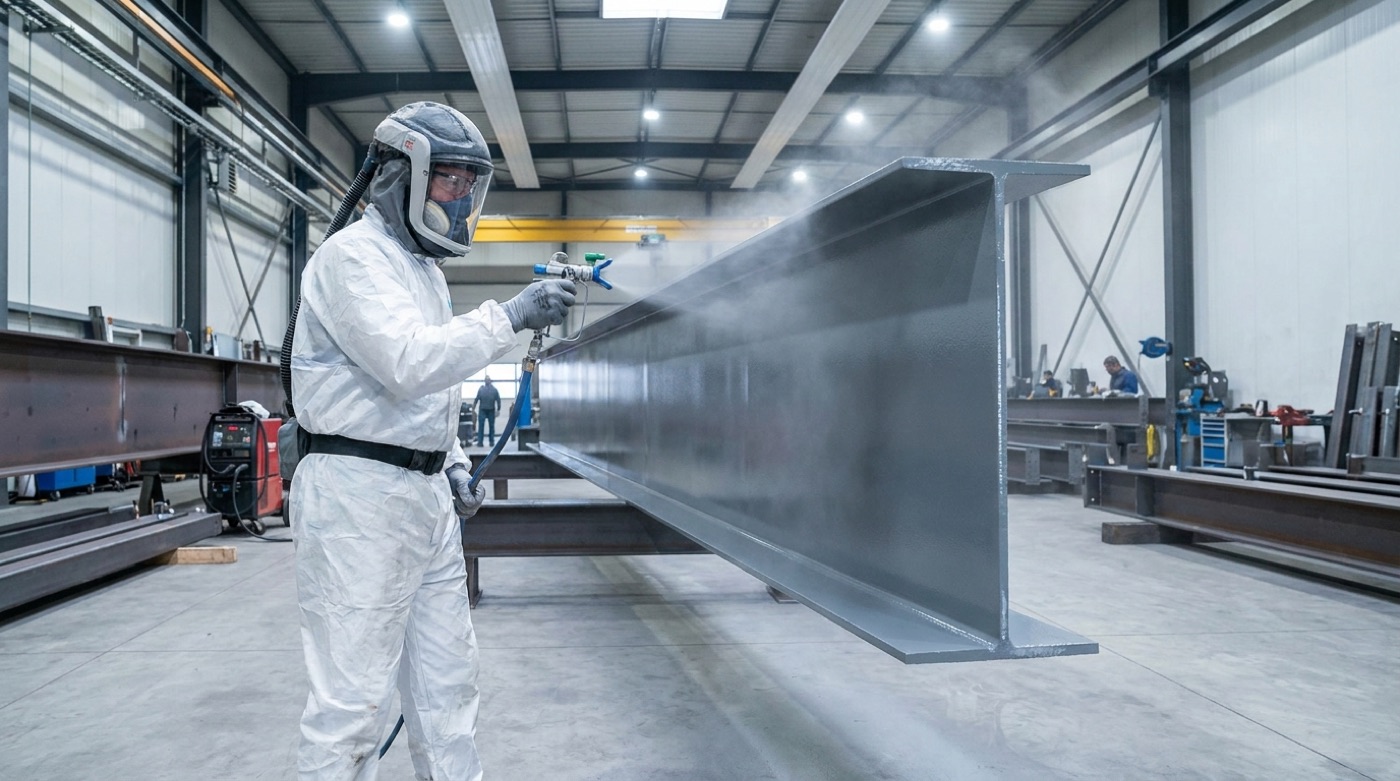
Understanding Coating Systems for Structural Steel: A Complete Guide
Structural steel is the backbone of modern infrastructure. Bridges, power plants, refineries, commercial buildings, and industrial facilities all depend on steel for structural integrity. But steel has one critical vulnerability — corrosion.
When exposed to moisture, oxygen, and especially chlorides in coastal or industrial environments, steel corrodes. Without protection, a steel structure can lose significant cross-section within years, compromising its load-bearing capacity and safety.
How Multi-Coat Systems Work
A protective coating system is not a single coat of paint. It is an engineered multi-layer system where each layer performs a specific function:
Primer — The first coat applied directly to prepared steel. Zinc-rich primers provide sacrificial (cathodic) protection. Epoxy zinc phosphate primers provide inhibitive protection. The choice depends on the environment severity.
Intermediate Coat — The barrier coat. Typically a high-build epoxy or epoxy MIO (micaceous iron oxide). This layer provides the bulk of the barrier protection, preventing moisture and oxygen from reaching the steel.
Topcoat — The finishing coat. Aliphatic polyurethane for exterior exposure provides UV resistance, colour retention, and gloss retention. FEVE fluoropolymer for extreme weathering. Polysiloxane for long-term maintenance-free performance.
Selecting the Right System
The correct system depends on several factors:
Environment — classified by ISO 12944 from C1 (very low) to CX (extreme offshore). A rural building requires a different system than a coastal bridge or an offshore platform.
Design Life — How long must the coating protect? 5 years (low), 15 years (medium), or 25+ years (high/very high)?
Surface Preparation — The foundation of any coating system. Abrasive blast cleaning to Sa 2.5 is the gold standard for high-performance systems.
DFT (Dry Film Thickness) — Each coat must achieve the specified thickness. Too thin reduces protection. Too thick can cause cracking.
Typical Systems by Environment
C3 General Industrial: Epoxy Zinc Phosphate (50μm) → Epoxy MIO (100μm) → Aliphatic PU (50μm). Total: 200μm.
C4-C5 Coastal/Marine: Inorganic Zinc Silicate (75μm) → High-Build Epoxy (150μm) → Aliphatic PU (50μm). Total: 275μm.
CX Offshore: Inorganic Zinc Silicate (75μm) → Glass Flake Epoxy (200-500μm) → Aliphatic PU (50μm). Total: 325-625μm.
The Anupam Approach
At Anupam Paints, we manufacture the complete range of structural steel coating systems — from zinc-rich primers to polyurethane topcoats. Our technical team can specify the right system for your project based on the actual environment, design life, and applicable standards.
Contact our technical team for a system recommendation specific to your project.
Need Technical Assistance?
Our team can help you select the right coating system for your specific application.